Our CBR strategy
We support children and youth with disabilities develop their abilities, meet their specific needs and claim their rights. We support them in speaking up for themselves. We see (re)habilitation as a key enabler for participation and inclusion. In addition, we also drive structural change, ensuring they can fully participate in mainstream services and community life, on an equal basis with others.
See CBR in action: A 3-minute animation showing why CBR matters and how it works.

Underlying principles
- Children, families and communities at the center
- Holistic, multi-sectoral approach
- Country context is key
- Rights-based programming
Our approach emphasizes equal partnerships with local actors, evidence-based programming and integration into existing community structures, ensuring long-term, sustainable impact.
CBR change pathways
Five pathways were identified through collaborative Breaking down Barriers research led by Liliane Fonds and Radboud University in partnership with universities in Cameroon, Sierra Leone, and Zambia. These pathways are crucial to enhance the rights and wellbeing of children and youth with disabilities and their families.
-
Impact in synergy
When planning and implementing programs, it is essential to focus on synergies within ánd between the five pathways. The interconnectedness between interventions allows progress in one area to catalyse improvements in others, ultimately creating inclusive, sustainable communities where children and young people with disabilities can thrive.
-
What makes a high-quality CBR programme?
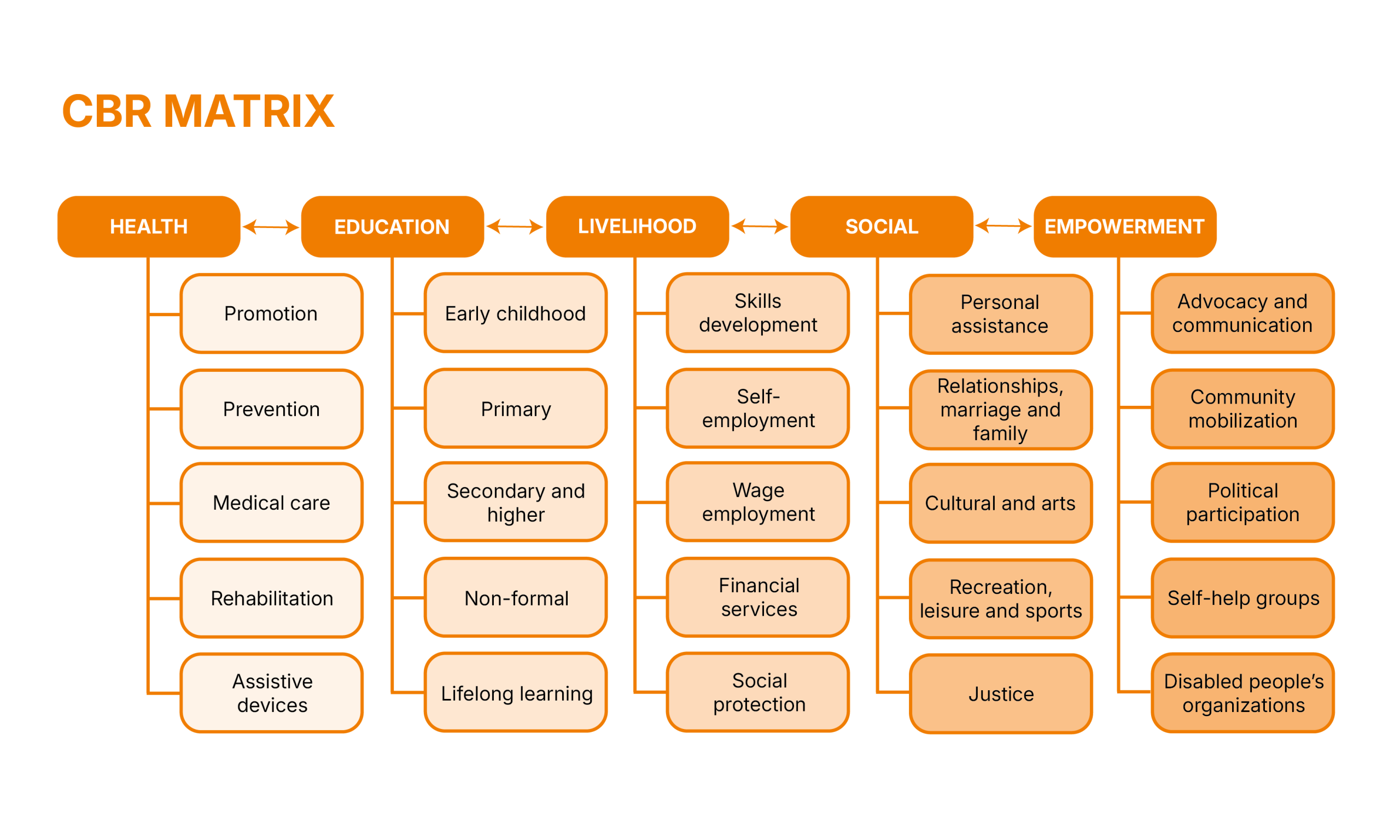
- Covers all five domains of the CBR Matrix: Health, Education, Livelihood, Social and Empowerment
- Implements multiple, interconnected interventions across the five CBR change pathways
- Aligns with policies and frameworks: UN Convention on the Rights of Persons with Disabilities (UNCRPD), national legislation, regional and international standards
An example of a CBR network in Rwanda
Our quality programmes enhance coordination and referral across health, education, livelihoods, social, and empowerment sectors, aligning with the CBR matrix and the Breaking Down Barriers pathways. Organisations of Persons with Disabilities (OPDs), children and youth with disabilities, and their families are central to programme design, delivery and evaluation.

Recommendations and actions
Liliane Fonds encourages partners and development actors to:
- Promote CBR as a strategy for Community-Based (Disability) Inclusive Development (CBID)
- Strengthen community level disability-specific services, alongside mainstreaming
- Empower families and caregivers to exercise their rights
- Foster social inclusion by reducing stigma via community leaders
- Ensure CBR is embedded in public systems for sustainability
- Share experiences and lessons learned to achieve structural change
-
Rwanda and Zambia
Watch videos and personal stories highlighting how CBR transforms lives in Rwanda and Zambia. These examples show the impact of collaboration, local ownership and a rights-based approach.
Zambia
> Watch the ZECREP CBR documentary
> Learn more about CBR in Zambia -
Explore our thematic expertise
Want to learn more about our thematic focus areas? We work across key themes to promote inclusion and equal opportunities for children with disabilities, from early intervention and inclusive education to livelihoods, SRHR and Child Protection and Safeguarding.
*Disclaimer: Liliane Fonds appreciates there are different, contested views on CBR/CBID. For Liliane Fonds the importance of access to basic rehabilitation services at community and family level and functional referral systems to specialized services are more important than terminology. We encourage our partners to align terminology with country policies and frameworks, whether that is CBR or CBID.